

In this dynamic world nothing is constant, so as the investment products. Investment products have become dynamic according to investors risk appetite, age, investment time horizon, responsibilities etc. No two investors can be given same product as it was the case in the past.
Investing these days has become a nerve-racking move. There are many questions that arises in your mind..What should you buy? Who can you trust? And most harrowing of all: What if you end up losing money?
Problem gets worse when we start taking advise from unprofessional self acclaimed advisors, which are readily available in our community.
Investing money is a simple and disciplined approach which becomes stressful excercise due to lack of awareness.
In 2018, we will follow these 18 simple DO’s and DON’Ts of investing which will always keep us stress free and will take us towards financial freedom.
1. DO: A lot of research.

Before putting in your hard earned money in any of the investment product do basic research. You can take help of your Financial Advisor who is professionally qualified to do so. Also you can take help of Television shows, radio programs, articles and other sources of investment advice that can point you in the right direction. But you should not follow at least mass media blindly as they are some times…you know that.
2. DON’T: Try to time the market:
As you can’t…
“Only liars manage to always be out during bad times and in during good times.” Bernard Baruch
Trying to time the market, as easy it seems to us in dreams is far from reality. Nobody in the forbes richest list has ever claimed to be a market timer, however they all own stocks. They are Investors.
3. DO: Diversify your investments.
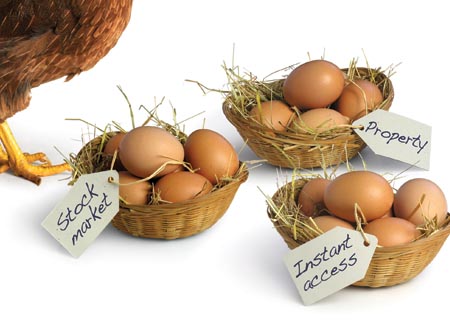
2006 — Welsummer Hen — Image by © Robert Dowling/Corbis
Don’t put all your eggs in one basket.
Too often, investors mistakenly understand the concept of “diversification” with “owning many investments.” However, a diversified portfolio should not be varied only in number of investments, but types of investments, too.
Investments must be segregated according to investor’s need, time horizon, risk appetite and must be in line with the products inherent risks and rewards. You have to add all the required spices to your dish, only then you can relish
4. DON’T: Invest according to emotion.
At the time when the stock market crashed in 2008, I was working for a Mutual Fund Company. I happen to see many types of emotions that emerged among the investors during that time. We can categorise broadly 3 categories of investors based on those emotions.
a) Fearful & Panicky:
They became restless after seeing their money gone down to half its value. They took out their money before any 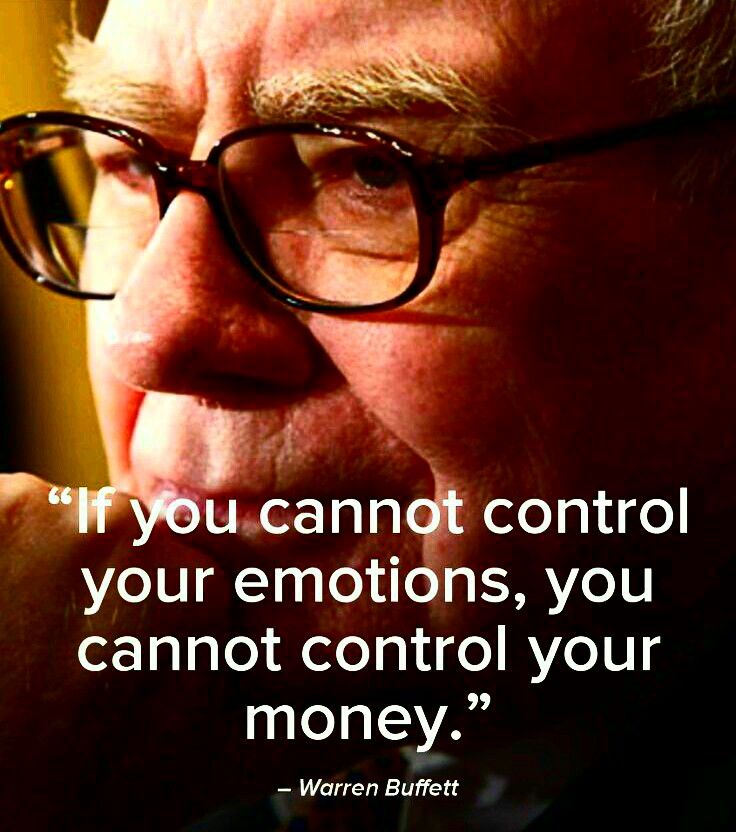 more of their money disappeared.
b) Waiters:
These investors did nothing and chose to wait as they knew equities are meant for long term. Their belief paid them up when the markets again rose to new heights.
c) Opportunist:
These are most balanced and rational kind of investors. They saw opportunity in equity investing at that time and kept on buying at the low levels. They were the happiest of all as when the markets rose their money multiplied exponentially. After all they controlled their emotions and kept on buying to lower their average buying price. They deserved it…
Even sometimes being positive goes destructive with an investment. Like when we invest in something which is not performing well, we keep on waiting in a hope that it will do well someday. We must review it and get out of it if it is of no use to us.
There’s no place for love or fear in investing
5. DON’T: Wait – Start Early. Believe in Power of Compounding
Think you can make up for lost time by investing more money down the road? Think Twice…
[table id=9 /]
6. DO: Maintain cash savings.
It is important to understand that most of the investments are meant for long term and with an objective or goal. You would never want to derail your investment objective by pulling out money from any of your long term investment.
You must have a cash account having atleast 6 months of your income in it. It can be a liquid mutual fund, it will work out for you in case of emergency expenses or expenses which are not planned.
7. DON’T: Follow the herd or play on momentum
 This is one of the most fatal thing we can do with our investments…get out of this mentality immediately. Boss we are not sheep or goat & if we will think like that, then surely get ready to be slaughtered.
This ideology has so many flaws:
- Your investment objective, risk appetite etc are unique to yourself only.
- If you will do the same thing what everybody is doing then you will also get the same result…however we know that everybody can’t get rich. Then how will we?
- You need to be fearful when others are greedy and you need to be greedy when others are fearful…we read this quote frequently but we forget it too frequently.
8. DON’T: Feel bad when stocks go down
Stock market rise and fall is its natural cycle. But still people forget that when the market falls. it is the best time to introspect ourselves, if we are an Optimist or Pessimist investor.
Stock market is the only place where we don’t like to buy cheap. We tend to run away from the market when markets fall & prices gets cheaper. Instead, we must look it as an opportunity to buy at lower prices and build a better portfolio
9. DON’T: Go for the quick profit
Investments are meant for long term. Most of the people who are rich around you have evolved rich with time. They have not become rich overnight, there is a lot of discipline, smart work, persistence & patience required for that. We must follow these traits while going for investments.
If someone assures you of a quick buck scheme, remember it can’t be an ‘Investment’ it can just be a ‘Speculation’.
10. DO: Understand the risks
 All the things and events in this universe involves some kind of visible or invisible risk. But most of the risks can be reduced or managed with some way or the other. Like riding a car on road might be a potential risk for someone who don’t know how to drive but for others its not. In this case we have reduced the risk by learning how to drive.
Likewise, you can manage investment risks by understanding them well in advance before investing. For that you should take help of a professionally qualified financial advisor.
“Risk comes from not knowing what you’re doing.” Warren Buffett
11. DO: Take advise from a professional financial advisor.
Expert advice may well can pay for itself many times over through better investment decisions that lead to improved long-term returns. It will keep you on track whenever your emotions will drag you away from the path towards your financial or investment objectives.
“Even the intelligent investor is likely to need considerable willpower to keep from following the CROWD” Benjamin Graham
12. DO: Invest for the long term
Investing in share of a company is starting partnership with that company. Everybody knows that business takes time time to grow and deliver big profits. There are ups and downs in all businesses and that is unavoidable.
Similarly stock market has inevitable fluctuations of share and bond values, and of the funds that invest in them. But these fluctuations and volatility matter less and less the longer you hold them, because the ups and downs even out over time. We must hold an investment till our investment objective is met or we don’t see potential in that investment in future.
“Our favorite holding period is forever” Warren Buffett
13. DO: Invest regularly
Take advantage of cost averaging by making regular investments. Systematic Investment Plan (click to read about SIP) is the best way to do that.
14. DON’T: Invest just for tax benefits
Don’t invest hastily at the last hour just to save tax. Always look for post tax returns in any investment, as our post tax returns should beat the inflation. You will hardly be able to achieve your life stage goals or have a good retirement life if you will not follow this.
Invest according to our life stage goals & retirement planning… People have already started doing so.
15. DO: Review your investment strategy regularly
 You should review your portfolio with your financial advisor every quarter or half year. It is important to check if we are on track towards what we have planned.
In reviews you can also modify your portfolio according to your need & changing income level.
16. DO: Start to invest no matter how small
You must not wait to start to invest by thinking that you don’t have much money. Power of compounding with time has the potential to convert small investments into big reward. (recheck the table above to see its power)
17. DO: Know your risk appetite
It is the most important aspect of financial planning. Risk Appetite is core foundation on which an investment portfolio is built. It defines how much risk you are willing to take to get the desired return.
If your risk appetite is higher, it means that you are ready for temporarily volatility or downside in the value of your portfolio . You can take higher risk for generating higher returns.
18. DON’T: Over invest
Setting a budget on how much you can invest is very important. It is very important to know how much you can invest without jeopardizing your financial situation.
It is also important to know how much money you are willing to invest for long term and how much for the short term. You must share all these details to your financial advisor.
Do write in comments if you have any other Do’s and Don’ts for investors in your mind.
Leave a Reply