

Sec 80C is the most talked about topic among tax payers especially during Jan-Feb-Mar every year.
Most of us already know that according to Income Tax Act 1961, Sec 80C has deduction in our taxable income upto Rs. 1.5 lakh during FY 2017-18.
Sec 80C allows us to invest in specified investment options during the financial year to avail this deduction for the FY. However it is up to us to choose among the available investment options where we want to invest. We must also consider the return potential of the investment rather than just focusing on making investment for the sake of tax benefit only.
However, there are certain expenditures which are also considered for tax deduction under Sec 80C. We will discuss all these options in this article.
Majority of the people in India are investing in Life Insurance Policies, Public Provided Fund (PPF), FD’s, Unit Linked Insurance Plans (ULIP). ULIP is often confused with Mutual Fund Investment, however they are not.
Various Investments & Expenditures for which we can claim deduction under Sec 80C for Financial Year 2017-18 are:
Public Provident Fund (PPF)

PPF is a scheme provided by the government and the investment in it is eligible for deduction under Section 80C. You can invest as low as Rs 500 and as high as Rs 1.5 lakh in a financial year.
The interest on PPF is currently tax-free (compounded yearly) and the maturity period is 15 years. A point worth noting is that the interest rate is assured but not fixed. The rate is subject to revision every quarter. Government has reduced the interest rate by 0.2 per cent. The interest rate effective for January-March 2018 quarter is 7.6 per cent.
Five-year Bank Fixed Deposits (FDs)
Term deposit with tenure of at least five years with a scheduled bank qualifies for deduction under section 80C, but the interest earned on it is taxable. However, while investing or reinvesting for FY 2017-18, one must keep in mind that the interest rates have come down drastically as compared to previous years.
Since FD rates will continue to go downwards in the long term so its not a better idea to invest in long term FDs. There are better options available for long term. Fixed deposits should be a short term investment instrument for an investor.
Life Insurance Premiums

Life Insurance premium paid for yourself or on behalf of spouse or children is also included in Sec 80C deduction. Premium paid by you for your parents is not eligible for the deduction under Sec 80C. You can include all the premiums, if you are having multiple policies. Insurance company may be LIC or any other private Insurance company.
Apart from individuals if a Hindu Undivided Family (HUF) buys a life insurance for its member, then it can claim tax deduction on the premium paid. But always remember just to buy a term insurance & don’t think about investing in Insurance. Treat it as an expense only.
Unit linked Insurance Plan (ULIP)
Life Insurance product when invests in equities and declares NAV becomes a ULIP policy. These products are often taken badly by investors due to their high charges in managing the investment. Higher charges eat up the real benefit of equity exposure in the product. Also, there are certain conditions associated with ULIPs as it is a life insurance policy as compared to other tax savers.
Equity Linked Savings Scheme (ELSS)

The most efficient but least considered Investment product under Sec 80C is ELSS. However, now more and more people are getting aware about it.
These are the mutual fund schemes which are specifically assigned to claim deduction under Sec 80C. ELSS has the potential of giving higher returns compared to other tax-saving instruments as the money is invested in equities.
You can invest any amount in the fund but deduction is available upto Rs. 1.5 lakh only.
ELSS comes with a lock-in period of 3 years and it is the lowest lock-in among all the options available under section 80C. ELSS is indisputably the best long term investment instrument for tax saving through Sec 80C.
Home Loan Principal Repayment

The principal you pay on Home loan during a financial year is eligible for deduction under Sec 80C. Even you can claim deduction on interest paid during the same financial year under Section 24 and Section 80EE of Income Tax Act. You can get deduction up to Rs. 1.5 lakh under Sec 80C by doing this expenditure.
Further, any payment made to development authorities like Jaipur Development Authority (JDA) in order to purchase a house (which has been allotted to you in a scheme made in this regard) also qualifies as deduction under section 80C. Stamp duty & amount paid for registration of documents while purchasing a house is also included in the deduction.
Earlier there was no deduction available for home loan principal but later it was included in Sec 80C.
Employees’ Provident Fund (EPF)

A part of your salary is deducted monthly as your contribution towards EPF. The total amount deducted annually can be claimed by you as deduction under Sec 80C, while computing your total taxable income.
However, you must check with your employer how much interest is earned on the corpus during the financial year. Interest earned above the limit of 9.5 per cent is taxable in the hands of the employee.
Similarly, if the contribution by your employer is more than 12 per cent of your salary, then the excess is taxable in your hands.
National Savings Certificate (NSC)
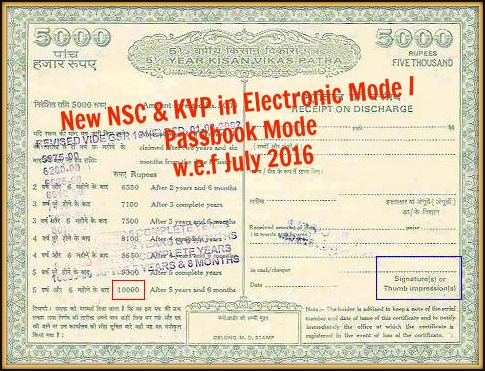
A person can purchase an NSC for as low as Rs 100 with no limit on the investment amount & has a maturity of 5 Years. . This interest is compounded half yearly and is taxable.
NSC being a cumulative investment scheme (i.e., interest is not paid to the investor but instead accumulates in the account), each year’s interest is considered reinvested in the NSC. Since it is deemed reinvested, it qualifies for a fresh deduction under Section 80C, thereby making it tax-free.
Only the final year’s interest, when the NSC matures, does not receive a tax deduction as it does not get reinvested, but is paid back to the investor along with the interest of the previous years and the capital amount. The interest on new issue of these certificates is revised quarterly by the government.
So, the interest earned every year, except the last one, is tax-free. Currently, it is offering the interest rate of 7.6 per cent.
Sukanya Samriddhi Account
Sukanya Samriddhi Yojana (SSY) is a small deposit scheme for the girl child launched as a part of the ‘Beti Bachao Beti Padhao’ campaign. It is currently (2016-17) fetching an interest rate of 9.1 per cent and provides income-tax benefit.
A Sukanya Samriddhi Account can be opened any time after the birth of a girl till she turns 10, with a minimum deposit of Rs 1,000. A maximum of Rs 1.5 lakh can be deposited during the ongoing financial year (FY16-17).
The account can be opened in any post office or authorised branches of commercial banks.
The account will remain operative for 21 years from the date of its opening or till the marriage of the girl after she turns 18.
To meet the requirement of her higher education expenses, partial withdrawal of 50 per cent of the balance is allowed after she turns 18. One can’t open two accounts for one girl.
Further, this account can be opened for a maximum of two girls and in case of twins this facility will be extended to the third child as well.
The amount has to be deposited in this account for 15 years. The account will be mature after 21 years, which means that you don’t have to deposit anything between the 16th and 21st year.
Interest rate on new deposits is subject to revision every quarter. The government has revised the interest on the scheme to 8.1 per cent for the quarter January-March 2018.
Senior Citizen Savings Scheme 2004 (SCSS) 

This scheme is meant only for senior citizens.
Any person of age 60 or above may open an account under this scheme. Amy person who has taken voluntary retirement between age 55 upto 60 is also eligible for the scheme. But such account has to be opened within 3 month of retirement.
The latest interest rate under this scheme is 8.3% payable quarterly. the interest is payable quarterly instead of compounded quarterly. Thus, unclaimed interest on these deposits won’t earn any further interest and also the interest earned is subject to tax. Interest on this scheme is also reset every quarter by the government for new accounts opened under the scheme.
Five-year Post Office Time Deposit (POTD) Scheme

POTDs are similar to bank fixed deposits. They are available for different time durations like one, two, three and five years but only five-year POTD qualifies for tax-saving under section 80C.
The interest on these is compounded quarterly, but paid annually. The interest rate is reviewed by the government every quarter. Currently, they are offering 6.9 per cent a year as decided by the government for January-March. Interest earned is entirely taxable.
Payment of Tuition Fees
This is an expenditure which no one can ignore. Tuition fee paid for children is eligible for deduction under Sec 80C. It does not include any other charges like development fee, sports fee etc.
Fees should be paid to a school, college, or university in India only
Contributions to National Pension System (NPS)
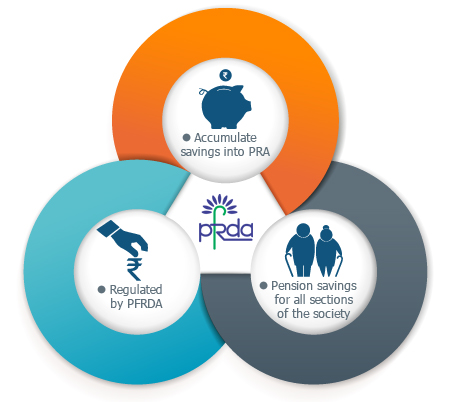
Any contribution made by an individual (whether employed or not) to the National Pension Scheme is also allowed as deduction to the individual under section 80CCD.
Combined deduction under section 80C and 80CCD cannot exceed Rs 1.5 lakh.
However, if one contributes an additional Rs 50,000 to NPS (over and above the combined limit of Rs 1.5 lakh) it can be claimed as deduction under section 80CCD(1B) i.e. total deduction that can be claimed for contributions to NPS is Rs 1.5 lakh plus Rs 50,000 under two different sections of the Income Tax Act.
NABARD Rural Bonds
The bonds issued by NABARD (National Bank for Agriculture and Rural Development) also qualify for deduction under section 80C. However, the availability of these bonds for investment depends on the government notifying the same. In recent years, these have not been available for section 80C investment.
Infrastructure Bonds
Popularly known as Infra Bonds, these were issued by infrastructure companies in FY2010-11, and FY2011-12 after getting permission from the government. However, these are not available now as the income tax provision allowing investment in these to be deducted from gross taxable income was not available after FY 2012-13. Investment of up to Rs 20,000 in these bonds was eligible for deduction from gross taxable income under Section 80CCF and this deduction was in addition to the deduction allowed under section 80C.
In our next article we will discuss about Saving Tax Beyond Sec 80C.
Do comment if you have any idea on what should be our next topic for article or any query related to this article.
Leave a Reply